
A Step-by-Step Guide to Maximizing Your Cape Cod Hydrangea Blooms

In our previous post, we explored the three most popular hydrangea types that grace the Cape Cod landscape: the Bigleaf (H. macrophylla), the Panicle (H. paniculata), and the Smooth (H. arborescens). While each brings unique beauty to your garden, they also demand a unique approach to pruning. Misunderstanding this crucial step is the single biggest reason gardeners miss out on a spectacular bloom season .

This tutorial provides a clear, step-by-step guide on when and how to prune these three key varieties, ensuring your hydrangeas are healthy, vigorous, and covered in flowers.

The Golden Rule: Old Wood vs. New Wood

The secret to successful hydrangea pruning lies in knowing whether your plant blooms on “old wood” (last year’s growth) or “new wood” (current year’s growth). Pruning an old-wood bloomer at the wrong time will remove all the flower buds, resulting in no blooms for the season.

Hydrangea TypeBlooms OnPruning Timing
Bigleaf (H. macrophylla)Old WoodRight after flowering (Late Summer)
Panicle (H. paniculata)New WoodLate Winter/Early Spring
Smooth (H. arborescens)New WoodLate Winter/Early Spring

1. Bigleaf Hydrangea (H. macrophylla): The Old Wood Bloomer

Bigleaf hydrangeas (Mopheads and Lacecaps) set their flower buds in late summer or early fall. Pruning them in late winter or spring will remove these buds.

When to Prune:

•Immediately after flowering in late summer (no later than August).

•Late winter/Early spring only to remove dead or damaged wood.

How to Prune:

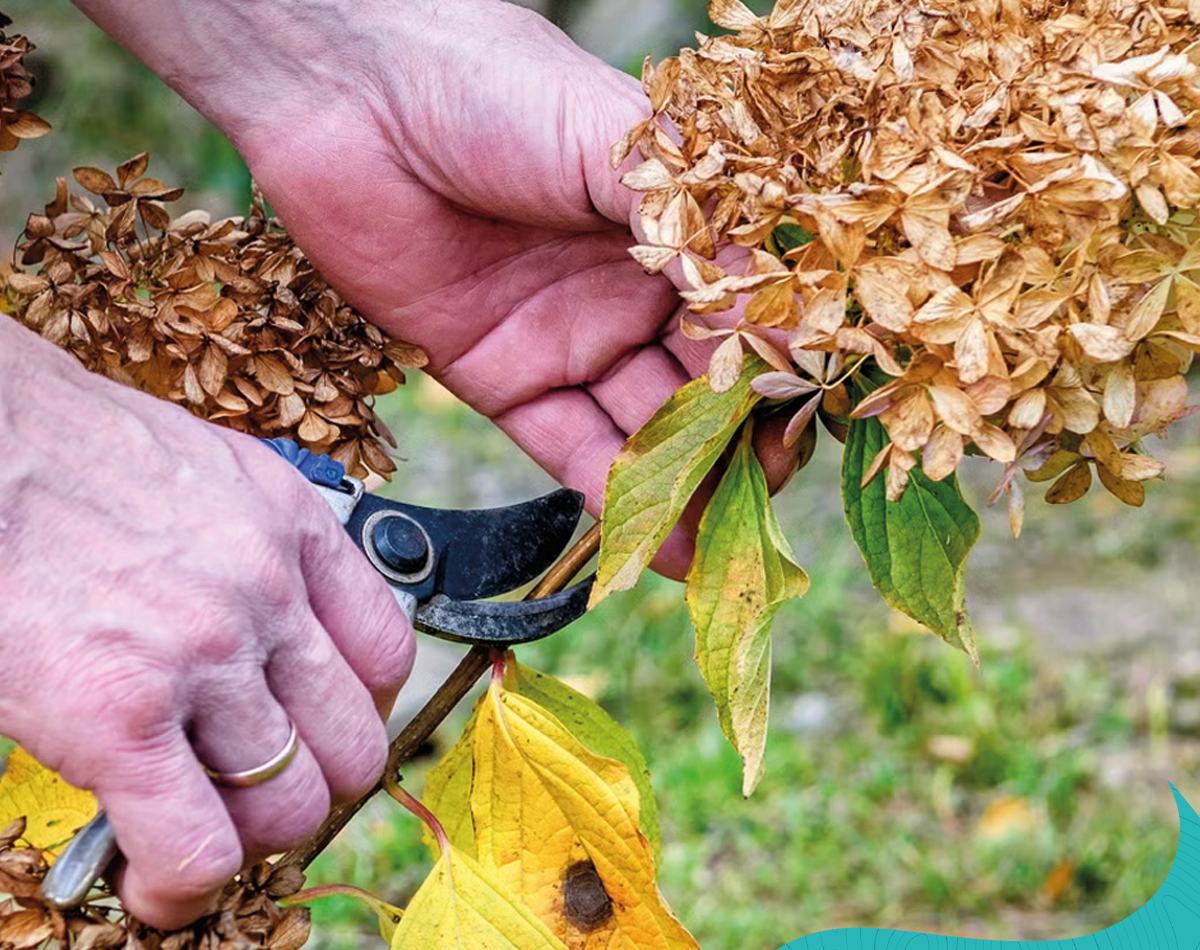
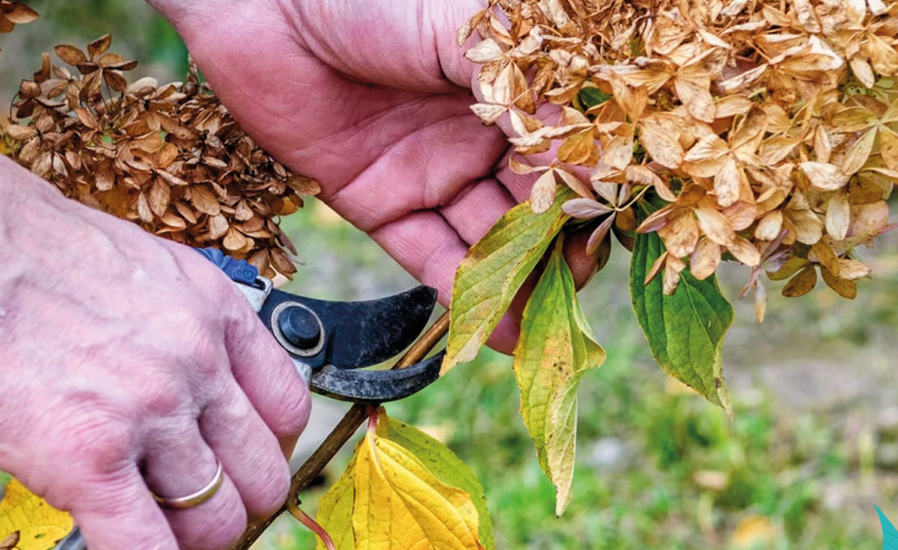
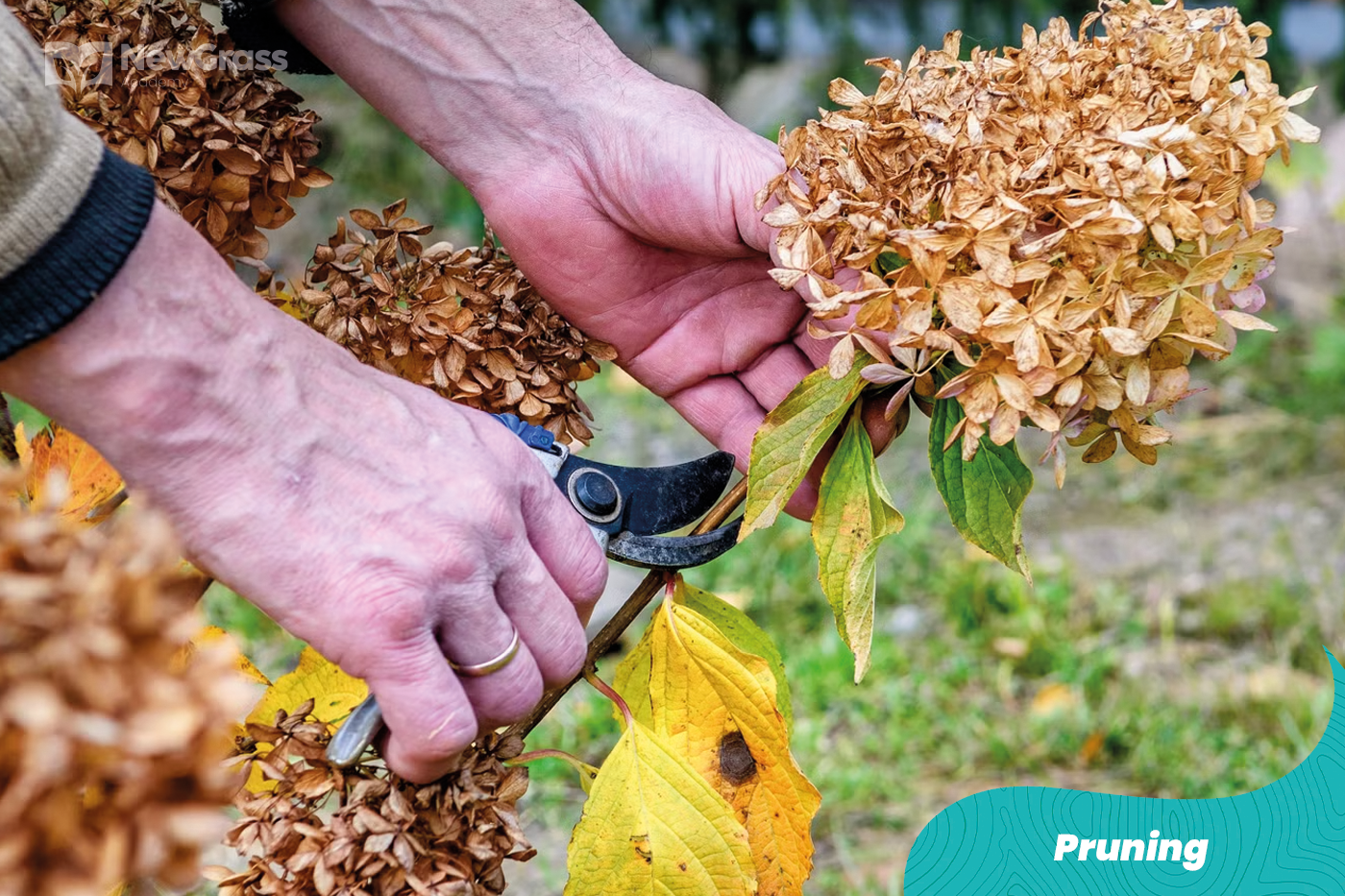
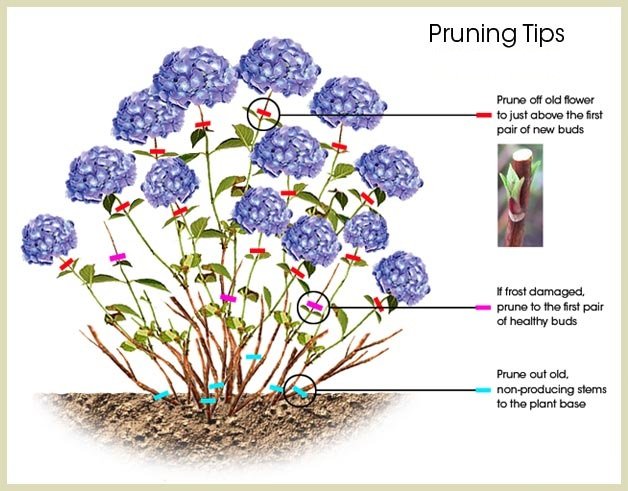
1.Remove Spent Blooms (Deadheading): Cut the faded flower head back to the first set of large, healthy leaves.

2.Remove Dead Wood: In late winter or early spring, look for canes that are gray, brittle, and show no sign of green when scratched. Cut these dead canes all the way back to the ground. This is essential for plant health.

Pruning Dead Cane on Bigleaf Hydrangea

A close-up, clear, and instructional image showing a gardener using hand pruners to remove a dead, gray cane from a Bigleaf Hydrangea (Hydrangea macrophylla). The surrounding canes are green and healthy. The focus is on the clean cut at the base of the dead cane.


2. Panicle Hydrangea (H. paniculata): The New Wood Powerhouse

Panicle hydrangeas are the easiest to prune because they bloom on new wood. You can prune them hard without sacrificing the season’s flowers.

When to Prune:

•Late winter or early spring, before new growth begins.

How to Prune:

1.Cut Back by One-Third: Reduce the overall size of the shrub by cutting back each branch by about one-third. Always cut just above a pair of healthy buds.

2.Remove Weak or Crossing Branches: Thin out any weak, spindly, or inward-growing branches to improve air circulation and direct the plant’s energy into stronger canes.

3.Encourage Stronger Stems: Pruning hard encourages the plant to produce fewer, but much stronger, stems, which are better able to hold up the large flower heads.

Pruning a Panicle Hydrangea in Late Winter

An instructional image showing a Panicle Hydrangea (Hydrangea paniculata) in late winter, before leaf-out. A gardener is cutting back a main branch by about one-third, showing the ‘new wood’ growth being encouraged.


3. Smooth Hydrangea (H. arborescens): The Severe Cut

Smooth hydrangeas, like the popular ‘Annabelle’, also bloom on new wood. They can be cut back severely each year to encourage the largest possible flower heads.

When to Prune:

•Late winter or early spring, before new growth begins.

How to Prune:

1.Cut Back Hard: Cut all stems back to a height of 6 to 12 inches above the ground. This process, called “coppicing,” forces the plant to put all its energy into new, strong stems that will support the massive blooms.

2.Leave a Framework (Optional): Some gardeners prefer to leave a few of the thickest, strongest stems at 18-24 inches to provide a bit more structure and support for the new growth.

Smooth Hydrangea (Hydrangea arborescens) Pruned Back

A clear, instructional image showing a Smooth Hydrangea (Hydrangea arborescens) cut back severely to about 6-12 inches above the ground in late winter. The image should clearly show the short, thick stumps remaining, ready for new spring growth.

The Benefits of a Well-Cared Hydrangea

Pruning is not just about aesthetics; it is a vital part of plant health and bloom maximization.

•Maximized Blooms: Correct pruning ensures you are not accidentally removing the flower buds, guaranteeing a spectacular show.

•Healthier Plant Structure: Removing old, weak, or dead wood improves air circulation, reducing the risk of fungal diseases and pests.

•Vigorous Growth: Pruning stimulates the plant to produce new, strong canes, leading to a more robust and resilient shrub.

•Tidier Appearance: A well-pruned hydrangea maintains a pleasing shape and size, fitting perfectly into your Cape Cod landscape design.

By following these simple, type-specific pruning rules, you will unlock the full potential of your Cape Cod hydrangeas, ensuring they remain the envy of the neighborhood for years to come.

Deixe um comentário

O seu endereço de e-mail não será publicado. Campos obrigatórios são marcados com *

Close Search Window